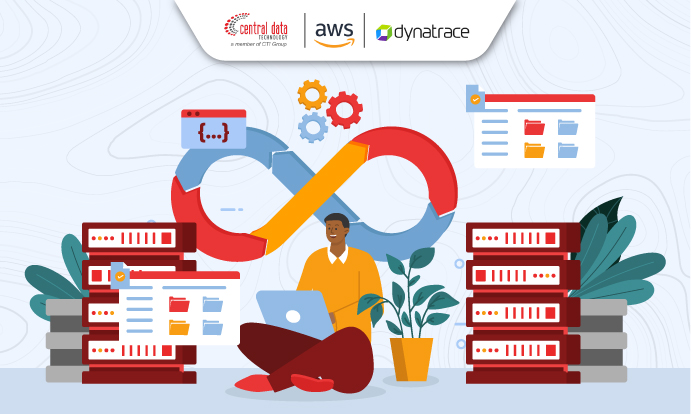
Are you frequently facing software development challenges or slow product delivery processes due to difficulties in integrating development and operations teams? You are not alone. According to Dynatrace data, 61 percent of IT leaders face the same issues. This often impacts slow product delivery, poor product quality, and instability in operational work.
Is a traditional approach enough? If you’re still using traditional software development methods and manual infrastructure management processes, these can be time-consuming and costly.
So, what’s the solution? DevOps is an approach you can use. The principle of DevOps is to automate and integrate processes between software development (Dev) and operational activities (Ops). By implementing DevOps, companies can speed up development, improve product quality, and stabilize operations. Now, what DevOps is, why it is important in software development, and how it works? Let’s explore it in the following article.
What is DevOps?
DevOps is an approach to software development that combines practices from Development and IT Operations. The goal is to accelerate the application development lifecycle through close collaboration between development and operations teams and to automate processes such as building, testing, and deploying using tools like Jenkins and Docker.
DevOps emphasizes Continuous Integration (CI) and Continuous Delivery (CD), ensuring that code is always ready for deployment and can be implemented easily and securely. This approach allows for faster iterations and better responses to changing business needs or discovered bugs.
Definition of the DevOps Model

In the DevOps model, practices such as Continuous Integration, Continuous Delivery, and Infrastructure-as-Code are heavily emphasized. Continuous Integration ensures that every code change is integrated and tested continuously, while Continuous Delivery allows for automatic deployment to staging or production environments. Infrastructure-as-Code enables IT infrastructure management using repeatable and scalable scripts.
The DevOps model also promotes a collaborative culture where development and operations teams work together to achieve common goals, eliminating traditional silos and focusing on improving the speed and quality of software delivery. It involves the use of automation tools, monitoring, and continuous feedback to ensure a more reliable and responsive system to dynamic business needs.
Why is DevOps Important in Software Development?
Before DevOps, development and operations teams worked separately. Testing (QA) and application delivery to production were distinct activities performed after the design and construction of the application were complete. This process often led to delays due to a lack of coordination and effective communication between teams.
In traditional methods, IT teams spent more time handling isolated daily operations than on the development cycle. Without DevOps, team members often spent their time testing, using, and designing isolated environments instead of building new application projects, new platforms, or new systems. This hampers innovation and efficiency in software development.
Traditional methods are also prone to human error in production due to a lack of automation and good integration. Separate and isolated development, project management, and IT infrastructure teams make traditional IT rigid and increasingly out of sync with the pace of business development. DevOps bridges this gap by integrating various team functions and creating a more collaborative and efficient environment.
How Does DevOps Work?

DevOps operates through a series of practices and tools that support collaboration between development and operations teams to accelerate the delivery of high-quality software. Here are the key steps in how DevOps works:
1. Planning and Code
At this stage, development and operations teams work together to plan new features and system improvements. They use project management tools to organize tasks and plan sprints.
2. Continuous Integration
Every code change made by developers is automatically merged into a central repository. This process includes automated testing, such as unit tests and integration tests, to ensure that new code does not break existing functionality.
3. Continuous Delivery
Once code has been successfully integrated and tested, the next step is Continuous Delivery. Code that has passed automated tests is automatically deployed to staging or production environments. This ensures that applications are always ready to deploy at any time.
4. Deployment
Deployment is carried out automatically to the production environment using orchestration tools like Kubernetes or AWS CodeDeploy. This allows new feature releases and software updates to be done quickly and reliably. Practices like blue-green deployment or canary deployment are often used to minimize downtime and ensure a smooth rollout.
5. Monitoring and Logging
After the application is live in production, continuous monitoring is performed to ensure system performance and reliability. Tools can be used to monitor application metrics, collect logs, and detect anomalies or potential issues. Proactive monitoring allows teams to respond quickly to disruptions or performance issues.
6. Feedback and Optimization
Feedback from monitoring, logging, and application users is used for further improvements. Teams conduct retrospectives periodically to evaluate processes and find ways to optimize and enhance the DevOps workflow. Continuous learning and adjustments are key in DevOps practices to ensure more efficient and responsive processes to changing business needs.
What Tools Are Suitable for Facilitating DevOps Implementation?
When implementing an effective and efficient DevOps solution, choosing the right tools is a key step. One option to consider is the integrated DevOps services from AWS and Dynatrace Observability. Both tools can bring significant transformation to how your company develops, tests, and delivers software.
AWS provides a range of advanced tools for automating and managing DevOps processes. With AWS, you can leverage services like AWS CodePipeline, AWS CodeBuild, and AWS CodeDeploy to automate build, testing, and deployment processes. This allows your team to manage the application lifecycle more efficiently, reduce human error risks, and speed up time to market.
Meanwhile, Dynatrace ensures that applications and infrastructure run optimally and reliably. With Dynatrace’s Observability solution, you can monitor application performance in real-time, analyze data deeply, and gain valuable insights to improve system quality and reliability.
Create Easier Product Delivery and Software Development with DevOps from AWS and Dynatrace
AWS provides a variety of services supporting DevOps, while Dynatrace offers observability solutions that aid in monitoring and troubleshooting. In this discussion, Central Data Technology (CDT) will explain how AWS and Dynatrace can be used together to create a more efficient and reliable DevOps process.
AWS DevOps Services
1. AWS CodeCommit
AWS CodeCommit is a fully managed Git-based source control service. It allows teams to store and manage their source code in a secure and scalable repository. CodeCommit simplifies collaboration by providing tools for code reviews and integration with CI/CD systems.
- Key Features: Secure Git repositories, code collaboration, integration with CI/CD tools
- Benefits: Eliminates the need to manage your own source control servers, enhances repository security and availability
2. AWS CodeBuild
AWS CodeBuild is a fully managed Continuous Integration service. It compiles source code, runs tests, and produces ready-to-use software packages. CodeBuild automatically scales its capacity, eliminating build queues.
- Key Features: Code compilation, test execution, automatic scaling
- Benefits: Reduces the complexity of managing build servers, improves CI/CD pipeline efficiency
3. AWS CodeDeploy
AWS CodeDeploy is a fully managed deployment service that automates software deployments to various computing services. CodeDeploy ensures application uptime by monitoring health and automatically rolling back if issues occur.
- Key Features: Automated deployments, health monitoring, automatic rollback
- Benefits: Guarantees consistent and reliable deployments, reduces downtime risks
4. AWS CodePipeline
AWS CodePipeline is a fully managed Continuous Delivery service. It helps automate the release pipeline from build, test, to deployment, enabling fast iterations and responses to feedback.
- Key Features: Automated release pipeline, custom plugin integration, event monitoring
- Benefits: Speeds up software release processes, improves release workflow control and reliability
Observability with Dynatrace
Dynatrace offers observability solutions that provide full visibility into applications and infrastructure. Observability includes monitoring, tracing, and logging, enabling DevOps teams to quickly identify, analyze, and resolve issues. Additionally, here’s how Dynatrace Observability fits into DevOps:
- Faster Problem Identification: With observability, teams can see application performance in real-time, identify bottlenecks, and address issues before affecting end-users
- Better Team Collaboration: Deep insights from observability allow development and operations teams to work together more efficiently in resolving issues
- Enhanced Application Reliability: Continuous monitoring ensures applications run optimally, reducing downtime and improving user experience
- Automated Problem Resolution: Observability enables automatic detection and response to issues, reducing manual intervention and speeding up resolution processes
Benefits of Combining AWS and Dynatrace in DevOps
Using AWS for DevOps provides a robust framework for automating and simplifying software development and delivery processes. Meanwhile, Dynatrace offers deep visibility into application and infrastructure performance, which is crucial for maintaining quality and reliability.
By integrating AWS services such as CodeCommit, CodeBuild, CodeDeploy, and CodePipeline with Dynatrace’s Observability, companies can create a more efficient and responsive DevOps environment. This combination allows teams to:
- Build and manage code securely and efficiently
- Automate build, test, and deployment processes for fast iterations and reliable releases
- Monitor application performance in real-time to quickly identify and resolve issues
- Enhance collaboration between development and operations teams through visibility and deep insights
Get DevOps Support from AWS and Dynatrace Only at CDT
It’s time to modernize and automate your application and business software development processes by implementing DevOps methods with Central Data Technology (CDT) comprehensively, reliably, and trustworthily. CDT, supported by a team of certified experts, will assist your company from consultation, development, to after-sales support for implementing DevOps solutions from AWS and Observability from Dynatrace.
Interested in starting DevOps implementation? Contact our team via the link below for more information.
Author: Ary Adianto
Content Writer, CTI Group