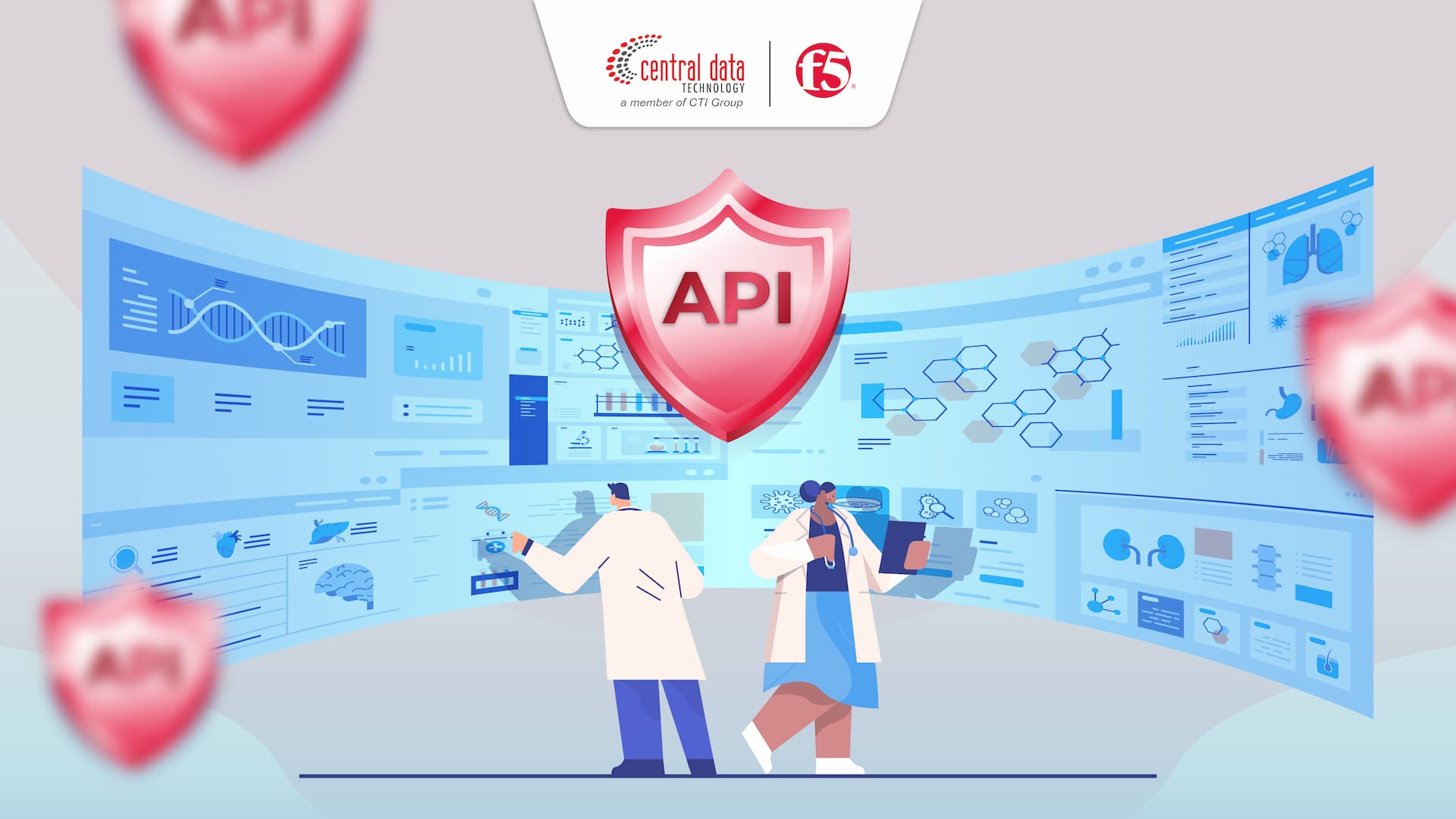
Digital transformation in healthcare is accelerating at an unprecedented pace. From interconnected hospital systems to mobile health applications and third-party integrations, data now flows faster and more seamlessly than ever before.
At the center of this ecosystem are APIs (Application Programming Interfaces), enabling real-time data exchange across platforms. But while APIs bring efficiency and innovation, they also introduce a growing security challenge.
The more organizations rely on APIs, the larger their attack surface becomes. Without a robust security strategy, APIs can quickly turn into entry points for attackers, putting patient data integrity and regulatory compliance at serious risk.
Why Modern Healthcare Systems Increase API Endpoint Risks
Modernizing healthcare systems isn’t just about adding new capabilities; it also introduces new layers of complexity.
Every integration, whether with mobile apps, internal systems, or external partners, creates new API endpoints that must be consistently secured and managed. Many APIs are developed rapidly to meet business demands, often leaving security behind.
This gap makes APIs one of the most attractive targets for attackers, especially since they directly handle highly sensitive data such as patient medical records.
The challenge grows even bigger with third-party integrations, including insurance platforms and digital health services. Each connection adds another potential vulnerability, especially when security standards differ across systems.
This is why healthcare organizations can no longer rely on partial protection. They need a comprehensive approach that delivers full visibility, control, and protection across the entire API ecosystem.
Eliminating Shadow APIs: The Visibility Challenge in Digital Healthcare
One of the biggest challenges in API security is a lack of visibility. Many organizations don’t have a complete inventory of their APIs, let alone understand how they are being used in daily operations.
This is where shadow APIs come into play. These undocumented or unmanaged APIs often emerge from rapid development, decentralized teams, or outdated endpoints that are still active but no longer maintained. Because they operate unnoticed, shadow APIs frequently bypass security controls, making them easy targets for attackers.
Without clear visibility, IT teams lose control. They can’t track who is accessing what data, how APIs are being used, or whether suspicious activity is occurring.
This is where F5 XCS becomes critical. With its API discovery capabilities, organizations can automatically identify all APIs, including previously unknown ones. By mapping endpoints and traffic behavior, hidden vulnerabilities can be uncovered and addressed before they are exploited.
Without proper visibility, organizations aren’t just blind; they’re exposed.
Critical Healthcare API Security Risks and Their Impact on Patient Privacy

In healthcare, API security risks go far beyond technical issues; they directly impact patient privacy and trust. APIs are prime targets because they handle high-value, sensitive medical data.
One of the most common vulnerabilities is Broken Object Level Authorization (BOLA), where access validation is improperly enforced. In such cases, attackers can access or manipulate other patients’ data simply by modifying API requests.
Additionally, bot-driven attacks are becoming increasingly sophisticated. Bots can scrape sensitive data, perform automated credential attacks, and exploit APIs at scale, often without being detected.
If left unaddressed, these vulnerabilities can lead to serious data breaches involving medical records. The consequences go beyond operational disruption; they can also result in regulatory violations and significant reputational damage.
Best Practices for Securing Healthcare APIs and Meeting Regulatory Requirements
Securing APIs requires a structured, multi-layered approach. The first critical step is gaining full visibility into all APIs. Without a clear inventory, organizations lack the foundation needed to build effective protection.
Next, access control must be strengthened through robust authentication and authorization mechanisms, ensuring only authorized users can access sensitive data. Data protection must also be applied end-to-end, both in transit and at rest.
Continuous monitoring is important. API activity should be analyzed in real time to detect anomalies early. In addition, bot protection and traffic rate limiting play a key role in preventing large-scale abuse.
By adopting these best practices, healthcare organizations not only improve their security posture but also position themselves to meet increasingly strict regulatory requirements.
How F5 XCS Simplifies and Unifies API Security
One of the biggest challenges in API security is managing multiple disconnected tools. Many organizations still rely on separate solutions for WAF, bot protection, DDoS mitigation, and API security, creating operational complexity and visibility gaps.
F5 XCS addresses this by bringing everything together into a single, integrated platform.
From web application protection and API security to bot defense and DDoS mitigation, everything can be managed centrally. This unified approach provides consistent visibility and simplifies security operations. With integrated controls, security teams can respond to threats faster, without switching between multiple systems.
F5 XCS also offers advanced API validation capabilities. Through schema enforcement and behavioral analysis, it can detect deviations from normal API behavior, often the earliest indicator of an attack.
Applying Zero Trust to Secure Healthcare APIs
As healthcare systems become more distributed and remote access increases, traditional perimeter-based security is no longer sufficient.
This is where the Zero Trust model becomes essential. Zero Trust operates on the principle that no request should be trusted by default. Every API request must be verified, based on identity, context, and access policies.
This approach ensures tighter control over patient data access. F5 XCS supports Zero Trust implementation through identity validation, granular access policies, and service segmentation, limiting how attackers can move within the system.
Real-Time Threat Detection with AI-Powered API Security
Modern cyber threats are increasingly difficult to detect. Many attacks are designed to mimic legitimate traffic, making traditional detection methods less effective.
To address this, F5 XCS leverages AI-driven technology to analyze API traffic behavior. Instead of relying solely on signature-based detection, it learns normal traffic patterns for each API. This allows the system to identify anomalies in real time, even when attacks appear legitimate.
The result is faster, more accurate threat detection with fewer false positives, ensuring security without disrupting operations.
Learn More: Other F5 Solutions
Building a Secure and Compliant Healthcare API Ecosystem with CDT
Even the most advanced technology requires the right implementation to deliver real value.
Central Data Technology (CDT), part of CTI Group, acts as a strategic partner for healthcare organizations in building secure API ecosystems.
CDT goes beyond deploying F5 XCS. It ensures that every implementation aligns with operational needs and regulatory requirements. From initial assessment and planning to deployment and continuous monitoring, every step is designed to create a secure, resilient, and compliant API environment.
With the right strategy and partner, healthcare organizations can not only protect patient data but also build a strong digital foundation for the future. Reach out to CDT to build a comprehensive, integrated, and compliance-ready API security strategy.
Author: Wilsa Azmalia Putri
Content Writer CTI Group